



You will not be allowed to compare more than 4 products at a time
View compareNABH Accredited Ayurvedic Hospital
Ayurvedic Coccydynia Treatment in Hyderabad: Precise Diagnosis, Customised Care
Ayurvedic coccydynia treatment in Hyderabad at KSAC Hospitals follows an evidence based Ayurveda in Hyderabad approach. Every plan begins with a precise diagnosis. Tailbone pain has several very different causes so the treating doctor first establishes whether the pain is traumatic, postural, post-partum, referred from elsewhere or without an identifiable cause, reviewing any existing X-rays or scans alongside a clinical examination before treatment is advised.
No two tailbone pain patients are treated the same way. As a recognised Ayurvedic hospital in Hyderabad, KSAC Hospitals provides customised, non-surgical coccydynia care, with specialised doctors building the plan around the patient's reports, examination findings, occupation and sitting pattern. Treatment is supervised and reviewed by the treating doctor at every stage.
NABH
Accredited (AH-2019-0070)
27+
Years Experience
5000+
Patients Treated
4.9★
319+ Google Reviews

NABH Accredited
Spine and Orthopaedic Care
Spine and Orthopaedic Care
What is coccydynia (tailbone pain)?
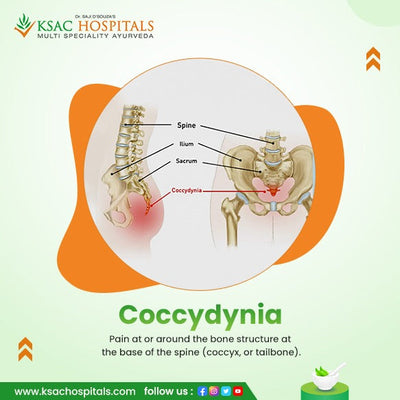
Coccydynia is pain localised at the coccyx, the small triangular bone at the very base of the spine. The coccyx is made up of three to five fused or partly fused segments and acts as an attachment point for the muscles, tendons and ligaments of the pelvic floor. When the coccyx or the soft tissue around it becomes inflamed, bruised or misaligned, the resulting pain is called coccydynia.
It can affect anyone but is reported more often in women, partly because the female pelvis is broader and the coccyx is more exposed while sitting. It is also common after a direct fall onto the tailbone, in women following childbirth and in people who sit for long periods on hard surfaces. Severity ranges from mild discomfort to pain that interferes with sitting, standing up and ordinary daily activity.
Types of coccydynia
Coccydynia is classified by what triggered it and how it presents. Establishing which type is present is the first step in planning care, because the types do not respond to the same approach.
Signs and symptoms of coccydynia
The hallmark is localised pain at the very base of the spine. Symptoms may include:
- Persistent or intermittent aching, throbbing or sharp pain at the tailbone
- Pain that worsens on sitting, especially on hard surfaces and eases on standing
- Increased discomfort when moving from sitting to standing
- Tenderness when the coccyx area is pressed
- Pain on prolonged sitting, driving or leaning backwards
- Discomfort during bowel movements or intercourse in some cases
- A radiating ache into the lower buttock or back of the thigh
- Muscular tension or spasm in the pelvic floor and lower buttock muscles
Common causes that contribute to coccydynia
Several factors may contribute to the onset of coccydynia. Common causes include:
- Direct trauma from a fall onto the buttocks or lower back
- Pressure on the coccyx during vaginal childbirth
- Prolonged sitting on hard, narrow or uneven surfaces
- Repetitive microtrauma from activities such as cycling or rowing
- Degenerative joint change at the junction between the sacrum and the coccyx
- Too much or too little movement in the coccygeal segments
- Pelvic floor muscle dysfunction or chronic spasm
- Excess body weight, which increases pressure on the coccyx when seated
- Scar tissue following spinal or pelvic surgery
- Infection or a growth involving the coccyx, which is rare but needs to be excluded where the presentation is atypical
How Ayurveda understands coccydynia
Ayurveda understands tailbone pain as a disorder of Vata, the functional principle that governs movement, dryness and degeneration. The pelvic region and the base of the spine fall within the domain of Apana Vata, the aspect of Vata that governs the lower abdomen, pelvis and elimination. When this is disturbed by trauma, long periods of sitting, poor posture or individual predisposition, the result is pain, stiffness and restricted function at the tailbone.
In plain terms, a Vata disturbance at this level leaves the local bone and muscle tissue dry and under-nourished. That is part of why coccydynia so often becomes chronic or keeps returning rather than settling on its own.
Ayurveda also recognises cold exposure, an irregular daily routine, frequent travel, a sedentary pattern and emotional stress as influences that aggravate Vata and can set off or sustain the condition. The practical value of this view is that it looks past the sore spot: alongside confirming the structural picture, the assessment at KSAC Hospitals asks what in the patient's sitting pattern, routine and history is keeping the area irritated. That understanding is what the treatment plan is built on.
How Ayurveda offers treatment for coccydynia
Coccydynia ayurvedic treatment does not aim at pain suppression alone. The aim is to settle the local irritation and muscle spasm, restore nourishment to the bone and muscle tissue at the tailbone, release the pelvic floor tension that often accompanies the condition and correct the sitting mechanics that caused it.
In practice this combines three things: physician-supervised Panchakarma therapy, internal Ayurvedic medicines prescribed by the treating doctor and guided physiotherapy with postural correction. Which of these a patient needs, in what combination and for how long is a clinical decision. It depends on the type of coccydynia, how long it has been present, whether there is a fracture or instability, the state of the pelvic floor and whether the pain is in fact referred from elsewhere. As a centre for Ayurveda treatment in Hyderabad, KSAC Hospitals keeps that decision with the specialised doctor rather than applying a fixed package.
How coccydynia treatment is planned at KSAC Hospitals
Treatment at KSAC Hospitals begins with diagnosis, not with a therapy list. The ayurvedic coccydynia treatment in Hyderabad programme is built around three principles:
Precise diagnosis first
The treating doctor establishes which type of coccydynia is present, whether there is a fracture, misalignment or instability, what the state of the pelvic floor is and whether the pain is actually arising from the lower spine or sacroiliac joint instead. Existing X-rays, scans and reports are reviewed as part of this assessment and further imaging is advised only where it is clinically needed.
Customised treatment, not a fixed protocol
Once the diagnosis is clear, a plan is prepared for that individual patient, based on their examination and imaging findings, the cause, their occupation and sitting pattern and their current medication. A post-partum presentation and a post-fall presentation are managed differently, as is pain referred from the lower spine.
Specialised doctors for each case
These cases are handled by doctors experienced in spinal and musculoskeletal care. Post-partum presentations, pelvic floor dysfunction and any atypical presentation are assessed accordingly and referred to the appropriate specialist within the hospital where required. The treating doctor supervises the plan through treatment and follow-up.
Where it is clinically appropriate, care may include physician-supervised Panchakarma therapies at the hospital's dedicated therapy unit, internal Ayurvedic medicines and guided physiotherapy. The specific therapies, medicines, sequence and duration are decided and explained by the treating doctor at consultation, in line with the patient's diagnosis. Tailbone pain ayurveda care at this Ayurvedic hospital in Hyderabad is non-surgical and delivered under physician supervision at every stage and patients are counselled on what their plan involves before treatment begins.
Physiotherapy, posture and movement guidance
Guided movement and postural correction are part of coccydynia care, introduced once the acute pain has settled. Guidance is individualised and typically covers:
- Pelvic floor relaxation work, since tension here often sustains the pain
- Gentle stretching of the buttock and hip muscles that attach near the coccyx
- Sitting posture correction, cushion selection and advice on breaking up long periods of sitting
- Adjustments for driving, desk work and any activity that loads the tailbone
The treating doctor and therapy team adjust this guidance at follow-up. For most patients this part of the plan is what prevents the problem returning so it is treated as core rather than optional.
How coccydynia is diagnosed at KSAC Hospitals
Diagnosis combines clinical examination with modern investigation where indicated, because the types of coccydynia need to be told apart before anything is advised. Assessment includes:
- Clinical history: Onset, duration, aggravating and relieving factors and any history of a fall, childbirth or prolonged sitting.
- Physical examination: Palpation of the coccyx, assessment of movement at the junction with the sacrum, evaluation of pelvic floor muscle tone and mapping of exactly where the tenderness lies.
- Review of existing reports and imaging: Any X-rays, scans and previous reports are reviewed where available so patients are asked to bring them to consultation.
- Further imaging where indicated: A coccyx X-ray taken in sitting and standing positions may be advised to assess alignment and instability or to identify a fracture. MRI may be recommended where soft tissue involvement or a referred source of pain needs to be excluded.
- Nadi Pariksha: Traditional pulse assessment, used alongside the clinical findings to understand the pattern of imbalance and the patient's constitution.
This combined approach is what allows the doctor to tell a traumatic, postural, post-partum, idiopathic or referred presentation apart and to plan accordingly. Findings are documented systematically and the treatment plan follows from them.
Recovery after Ayurvedic coccydynia treatment
Treatment response varies from person to person. Recovery is influenced by how long the condition has been present and how severe it is, the underlying cause, the patient's general health and how consistently the prescribed therapy and lifestyle guidance are followed. The treating doctor determines follow-up timing based on the individual's condition.
Patients receiving tailbone pain ayurveda care at KSAC Hospitals are guided on sitting posture, cushion use, movement patterns and dietary adjustment to support recovery. Progress is reviewed at follow-up consultations and the plan is adjusted as required, which matters here because sitting tolerance usually improves in stages rather than all at once.
Related areas of spine and joint care include ayurvedic sciatica treatment in Hyderabad, ayurvedic lumbar spondylosis treatment in Hyderabad, ayurvedic cervical spondylosis treatment in Hyderabad and ayurvedic knee pain treatment in Hyderabad.
Can coccydynia recur after treatment?
Coccydynia can recur where the contributing factors remain unaddressed. Patients who return to long periods of sitting on hard surfaces, who do not follow the postural guidance or whose pelvic floor dysfunction is unresolved may find symptoms return. Post-partum coccydynia may also recur with a subsequent pregnancy.
The plan at KSAC Hospitals therefore includes counselling on sitting habits, ergonomic adjustment and pelvic floor work, with periodic maintenance therapy for patients who are constitutionally predisposed. If symptoms do return, an early review with the treating doctor allows the plan to be adjusted in good time.
Why patients choose KSAC Hospitals for coccydynia care
Precise diagnosis before treatment
Treatment is advised only after the type of coccydynia, any fracture or instability and the state of the pelvic floor have been established and after referred sources of pain have been considered.
Evidence based Ayurveda
Classical Ayurvedic care is combined with modern diagnostic evaluation and each decision is supported by documented assessment. Evidence based Ayurveda in Hyderabad at KSAC Hospitals means the plan follows the findings.
Customised treatment plans
Therapy, medicines and duration are decided case by case. A post-fall, post-partum and postural presentation are not managed the same way.
Specialised doctors for each case
Cases are managed by doctors experienced in spinal and musculoskeletal care, with onward referral within the hospital where the presentation requires it.
Non-surgical management
Care for coccydynia here is entirely non-surgical, with no invasive procedures involved.
Integrated rehabilitation
In-house physiotherapy and postural guidance are integrated with the clinical plan rather than left to the patient to arrange.
NABH accreditation
KSAC Hospitals holds NABH accreditation (AH-2019-0070), reflecting adherence to national quality and safety standards in hospital operations.
Convenient location
On Banjara Hills Main Road, adjacent to Taj Deccan, accessible from across Hyderabad and the wider Telangana region.
Coccydynia treatment specialists in Hyderabad
Every patient is treated by a qualified doctor from the specialists team, not a generalist.

4:12
Dr. Saji D'Souza - Chief Physician and Founder
BAMS (Kerala), MS (Rajiv Gandhi University). Dr. Saji D'Souza is the founder of KSAC Hospitals and supervises treatment planning for coccydynia and other spine and tailbone conditions. His approach combines classical Ayurvedic principles with modern diagnostic tools to deliver individualised, non-surgical care for every patient.
Ready for a Consultation?
Get a precise diagnosis and a customised treatment plan for your coccydynia.
Contact and Location
6-3-252/1/3, Banjara Hills Main Road, adjacent Taj Deccan, Irram Manzil Colony, Banjara Hills, Hyderabad, Telangana 500034
+91 98661 30743
+91 81062 45454
info@ksachospitals.com
Frequently Asked Questions
What is coccydynia and why does the tailbone hurt?
Coccydynia is pain at the coccyx, the small bone at the base of the spine. It can follow a fall or childbirth, build up from long periods of sitting, be referred from the lower spine or pelvic floor or sometimes have no identifiable cause. The pain typically worsens on sitting and eases on standing or walking. Because the causes differ so much, the first step is establishing which one applies.
Will I be given the same treatment as other tailbone pain patients?
No. A post-fall injury, a post-partum presentation, pain from prolonged sitting and pain referred from the lower spine all need different plans. The treating doctor decides after diagnosis and examination and explains the plan before treatment begins.
Can Ayurveda help with chronic tailbone pain?
Ayurvedic coccydynia treatment in Hyderabad at KSAC Hospitals addresses long-standing tailbone pain through physician-supervised therapy, internal medicines and guided rehabilitation, planned according to what the examination and imaging show. For suitable cases this approach may help manage pain, reduce stiffness and improve sitting tolerance over time.
Is coccydynia treatment at KSAC Hospitals non-surgical?
Yes. Ayurveda treatment in Hyderabad at KSAC Hospitals for coccydynia is entirely non-surgical and involves no invasive procedures. Care combines physician-supervised external therapy, internal medicines and physiotherapy, with the specific elements decided by the treating doctor.
Do I need to bring my X-ray to the consultation?
Yes, where available. X-rays, scans and previous reports help the doctor arrive at a precise diagnosis, particularly in ruling out a fracture, instability or a referred source of pain. Coccydynia ayurvedic treatment at KSAC Hospitals is planned around clinical findings and the patient's own reports and fresh imaging is advised only where it is needed.
How long does Ayurvedic coccydynia treatment take?
Treatment response varies from person to person. It depends on the cause and severity, the patient's general health and how consistently the plan is followed. The treating doctor reviews progress and adjusts the plan at each follow-up rather than working to a fixed course length.
Can coccydynia come back after Ayurvedic treatment?
Recurrence is possible where contributing factors such as prolonged hard-surface sitting, poor posture or pelvic floor dysfunction persist. The plan therefore includes preventive counselling, ergonomic guidance and periodic maintenance therapy where indicated, to reduce that risk.
NABH
Accredited Hospital
27+
Years of Practice
4.9
Average Rating
319+
Google Reviews
Begin Coccydynia Care
Consult a specialised doctor to get a precise diagnosis and customised Ayurvedic treatment plan for your coccydynia.
- NABH Accredited (AH-2019-0070)
- 27+ years with 5000+ patients
- Banjara Hills, Hyderabad
Call: +91 98661 30743
Latest Blogs
Evidence-based articles and expert commentary on spine and orthopaedic care.
July 2025
Best Ayurvedic Treatment for Coccydynia in Hyderabad
The medical word “coccydynia” refers to pain in the coccyx or tailbone region...
June 2026
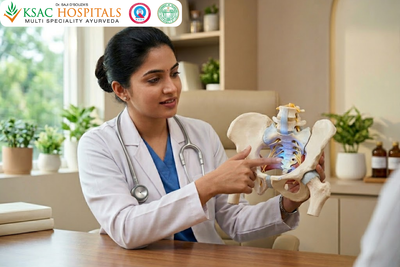
Coccyx Pain Treatment in Hyderabad : Care for Persistent Tailbone Discomfort
What is the coccyx, why tailbone pain develops and why it refuses to heal on ...
October 2026
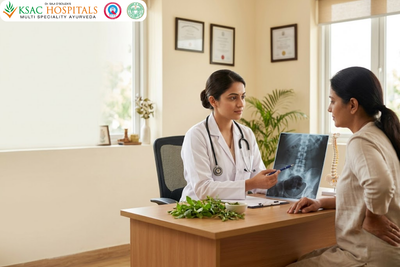
Difference Between Lumbar Pain and Tailbone Pain: How to Know Which Condition You Have
How to tell the difference between lumbar pain and tailbone pain. Anatomy, ca...
KSAC Hospitals
6-3-252/1/3, Banjara Hills Main Road, adjacent Taj Deccan, Irram Manzil Colony, Banjara Hills, Hyderabad, Telangana 500034
Phone: +91 98661 30743 · WhatsApp: +91 81062 45454 · Email: info@ksachospitals.com
Medically reviewed by Dr. Saji D'Souza (BAMS, MS). Last updated: October 2026.
If tailbone pain follows a significant fall or injury, or comes with fever, unexplained weight loss, numbness or a change in bladder or bowel function, please seek urgent medical assessment.