



You will not be allowed to compare more than 4 products at a time
View compareNABH Accredited Ayurvedic Hospital
Ayurvedic Sciatica Treatment in Hyderabad: Precise Diagnosis, Customised Care
KSAC Hospitals provides structured ayurvedic sciatica treatment in Hyderabad for patients with sciatic nerve pain, lower back pain radiating through the buttock and leg and the numbness or weakness that can come with it. Every plan begins with a precise diagnosis, because sciatica is a symptom rather than a diagnosis in itself. The treating doctor reviews the patient's MRI and other imaging alongside a clinical examination to establish what is actually compressing or irritating the nerve before treatment is advised.
That distinction decides everything that follows. A herniated disc, a narrowed spinal canal, a slipped vertebra and a tight muscle in the buttock can all produce the same leg pain and they are not managed the same way. At this Ayurvedic hospital in Hyderabad, specialised doctors build the plan around the individual's imaging findings, examination, occupation and functional goals and the plan is supervised and reviewed by the treating doctor at every stage.
NABH
Accredited (AH-2019-0070)
27+
Years Experience
5000+
Patients Treated
4.9★
319+ Google Reviews

NABH Accredited
Spine Care Centre
What Is Sciatica?
Sciatica is pain that travels along the path of the sciatic nerve, the longest and thickest nerve in the body. It is formed by nerve roots leaving the spine at the L4 to S3 levels, passes through the pelvis and down the back of the leg to the foot. When one or more of those nerve roots is compressed, irritated or inflamed, the pain radiates from the lower back through the buttock and down the affected leg.
It matters that sciatica is a symptom rather than a diagnosis. The leg pain is a signal that something is affecting the nerve pathway and the point of assessment is to find out what. Classical Ayurveda describes this presentation as Gridhrasi, named for the altered gait it produces and connects it to a disturbance of Vata in the lower body. Common underlying causes include a herniated disc, narrowing of the spinal canal, tightness of the deep buttock muscle and age-related change in the lower spine.
The pain may be sharp, burning or shooting along the nerve path. Some patients also have numbness, tingling or weakness in the affected leg. Symptoms often worsen with prolonged sitting or standing and with movements such as bending forward. Sciatica usually affects one leg and less commonly both, which needs closer evaluation.
Types of Sciatica
True Sciatica
This follows direct compression or irritation of the sciatic nerve or the nerve roots feeding it. It is typically caused by a herniated disc, a narrowed spinal canal or another structural change in the lower spine that puts mechanical pressure on the nerve. The pain follows a defined band down the leg and comes with neurological signs such as numbness, tingling or weakness.
Referred Sciatica
Here the pain travels along the same route without the nerve itself being compressed. It arises from problems in nearby structures such as the joint at the base of the spine, the small joints of the lower spine or the surrounding soft tissue. The pattern can mimic true sciatica but examination shows no nerve deficit. The distinction is clinically important, since the cause and the correct treatment differ.
Sciatica on Both Sides
Pain radiating down both legs at once is less common than one-sided sciatica. It may point to a central disc herniation, significant narrowing of the spinal canal or compression of the bundle of nerves at the base of the spine. Symptoms on both sides need prompt and careful evaluation rather than conservative treatment started on assumption.
Acute and Chronic Sciatica
Acute sciatica develops suddenly, often after heavy lifting or a sudden twist and typically lasts from a few days to several weeks. Chronic sciatica persists beyond eight to twelve weeks or recurs repeatedly over months. The shift from acute to chronic may involve continuing structural compression, sustained inflammation or changes in how the nervous system processes pain.
Sciatica from Muscle Entrapment
Here the piriformis muscle, a deep muscle in the buttock, tightens or spasms and presses on the sciatic nerve as it passes beneath or through it. This produces buttock pain and leg symptoms aggravated by prolonged sitting, stairs or turning the hip. It is worth identifying because the compression is outside the spine altogether so treatment aimed at the spine would miss it.
Signs and Symptoms of Sciatica
Sciatica presents as a combination of pain, altered sensation and loss of function. Commonly reported signs include:
- Shooting or burning pain: A sharp, electric or burning pain travelling from the lower back or buttock down the back of the thigh into the calf or foot, following the course of the nerve. It may intensify on coughing, sneezing or straining.
- Numbness and tingling: Reduced sensation or a pins and needles feeling in the affected leg, foot or toes. Some areas may feel numb while others are unusually sensitive to touch.
- Leg weakness: Reduced strength in the affected leg, which may cause difficulty lifting the foot, climbing stairs or keeping balance. Weakness indicates that the motor fibres of the nerve are involved so it is assessed rather than simply treated for pain.
- Pain worse on sitting: Sitting raises pressure on the lower back discs and can further compress the affected nerve roots. Many patients find that standing or walking brings partial relief.
- One-sided symptoms: Sciatica usually affects one leg, on the same side as the affected nerve root. Involvement of both legs is possible and warrants prompt evaluation.
When Sciatica Needs Urgent Assessment
Most sciatica is managed without urgency. A small number of presentations are different and need immediate medical assessment rather than a course of conservative treatment. Seek urgent care, the same day, if any of the following occur:
Seek immediate medical assessment if you experience:
• Weakness in the leg that is getting worse or difficulty lifting the front of the foot
• Numbness around the inner thighs, buttocks or genital area
• Any change in bladder or bowel control, including difficulty passing urine or loss of control
• Sudden severe symptoms in both legs together
• Sciatic pain following significant trauma such as a fall or an accident or occurring alongside fever or unexplained weight loss
These can indicate compression of the bundle of nerves at the base of the spine, known as cauda equina syndrome or another condition needing surgical assessment. In those situations delay affects the outcome so the correct step is emergency assessment at a hospital rather than booking an elective consultation. Patients already under care at KSAC Hospitals are asked to report new or worsening weakness or any change in bladder or bowel function without waiting for their next appointment.
Common Causes That Contribute to Sciatica
Sciatica results from compression, irritation or inflammation affecting the sciatic nerve or the nerve roots feeding it. Commonly recognised causes include:
- Herniated disc: A disc in the lower spine bulges or ruptures and presses on a nearby nerve root. Herniation at the L4-L5 or L5-S1 levels is the most frequent structural cause.
- Spinal narrowing: Narrowing of the spinal canal or of the openings where nerves exit reduces the space available to the nerve roots. It may follow age-related change, thickened ligaments or bony overgrowth.
- Muscle entrapment: Tightness, spasm or inflammation of the deep buttock muscle compresses the nerve as it passes through or beneath it. This is distinct from compression inside the spine.
- Degenerative disc disease: Age-related wear reduces disc height and can lead to bulging, bony spurs and less room for the nerve roots.
- Spondylolisthesis: Forward slippage of one vertebra over the one below narrows the space through which the nerve root exits, which can compress it at that level.
- Sedentary routine: Prolonged sitting weakens the core and spinal support muscles, raises pressure on the discs and reduces blood flow to the spinal structures, which contributes to degeneration and nerve irritation over time.
- Excess body weight: Excess weight increases the mechanical load on the lower spine, accelerates disc degeneration and sustains the low-grade inflammation that can irritate a nerve root.
How Ayurveda Understands Sciatica
Ayurveda describes sciatica as Gridhrasi and understands it as a disorder of Vata, the functional principle that governs movement in the body, including the transmission of nerve impulses. When Vata is disturbed in the lower back, pelvis and legs, the result is pain along the nerve, altered sensation and weakness.
Where the problem involves a disc, a second factor is recognised. The disc depends on a stable, well-hydrated structure to hold its shape and when that quality is disturbed the result is swelling, stiffness and obstruction, which compounds the nerve irritation. This is why a disc-related presentation and a purely muscular one are assessed as different problems rather than treated alike.
Ayurveda also looks at the nourishment reaching the lower spine and the nerve itself, which can be reduced by weak digestion, chronic postural strain and accumulated metabolic waste settling in the area. The practical value of this view is that it looks past the MRI image. Alongside confirming what is compressing the nerve, the assessment at KSAC Hospitals asks what in the patient's posture, occupation, weight and digestion is sustaining the problem. That understanding is what the treatment plan is built on.
How Ayurveda Offers Treatment for Sciatica
Ayurvedic treatment for sciatica aims at more than pain suppression. The aim is to settle the inflammation and muscle spasm around the affected level, support the nourishment of the nerve and the tissue around it and rebuild the core strength and postural control that take pressure off the nerve so the same compression does not simply return.
In practice this combines three things: physician-supervised Panchakarma therapy, internal Ayurvedic medicines prescribed by the treating doctor and guided spinal and hip rehabilitation. Which of these a patient needs, in what combination and for how long is a clinical decision. It depends on what is compressing the nerve, how long symptoms have been present, the degree of nerve involvement, the imaging findings and the patient's general health. As a centre for Ayurveda treatment in Hyderabad, KSAC Hospitals keeps that decision with the specialised doctor rather than applying a fixed package.
Care here is non-surgical and intended for suitable cases. Where the examination or imaging indicates that surgical assessment is needed, the treating doctor says so and refers accordingly rather than proceeding with conservative treatment.
How Sciatica Treatment Is Planned at KSAC Hospitals
Treatment at KSAC Hospitals begins with diagnosis, not with a therapy list. The ayurvedic sciatica treatment in Hyderabad programme is built around three principles:
Precise Diagnosis First
Sciatica is a symptom so the first task is establishing its cause. The treating doctor determines whether the nerve is being compressed by a disc, a narrowed canal, a slipped vertebra or a tight muscle outside the spine, which level and nerve root are involved and whether there is any motor weakness. The patient's MRI, CT or X-ray reports are reviewed as part of this assessment.
Customised Treatment
Once the cause is clear, a plan is prepared for that individual patient, based on their imaging findings, clinical examination, occupation, posture and current medication. A disc-related presentation and one caused by muscle entrapment may both present as leg pain and they are managed differently.
Specialised Doctors
Spine and nerve cases are handled by doctors experienced in this area of care. Presentations with progressive weakness, symptoms in both legs or any sign of nerve bundle compression are assessed with particular caution and referred for surgical or specialist review where required.
Where it is clinically appropriate, care may include physician-supervised Panchakarma therapies at the hospital's dedicated therapy unit, internal Ayurvedic medicines and in-house rehabilitation. The specific therapies, medicines, sequence and duration are decided and explained by the treating doctor at consultation, in line with the patient's diagnosis. Sciatica ayurveda care at this Ayurvedic hospital in Hyderabad is delivered under physician supervision at every stage and patients are counselled on what their plan involves before treatment begins.
Spinal and Hip Mobility Guidance
Structured rehabilitation is part of sciatica care rather than an optional extra, since it addresses the mechanical load that caused the compression. The programme is individualised, introduced within the patient's pain-free range and typically covers:
- Core strengthening to support the lower spine and reduce pressure on the nerve roots
- Progressive spinal and hip mobility work appropriate to the level involved
- Stretching and release work for the deep buttock and hip muscles where these are contributing
- Postural correction for sitting, standing and lifting, with guidance on breaking up long periods of sitting
- Adapted yoga-based practices and breathing exercises, where suitable for the patient's condition
The treating doctor and therapy team advance the programme at follow-up as symptoms settle and mobility improves. For most patients this part of the plan is what prevents recurrence so adherence matters as much as the clinical treatment.
How Sciatica Is Assessed at KSAC Hospitals
Assessment begins with a detailed consultation combining clinical evaluation with Ayurvedic diagnostic methods. It includes:
- Clinical history: Onset, duration, location and nature of the pain, what aggravates and relieves it, previous treatment and the effect on daily activity and mobility.
- Review of MRI and imaging: MRI, CT and X-ray reports are reviewed where available, to identify disc herniation, canal narrowing, vertebral slippage or degenerative change behind the symptoms. These findings shape the plan directly so patients are asked to bring their imaging to consultation.
- Clinical and neurological examination: Nerve tension testing, assessment of sensation, muscle strength and reflexes in the affected leg and examination of the lower back and hip to localise the source and establish whether motor function is affected.
- History and lifestyle review: Occupation, sitting and lifting demands, posture habits, previous injury and any associated condition that may influence recovery.
- Nadi Pariksha: Traditional pulse assessment, used alongside the clinical findings to understand the pattern of imbalance and the patient's constitution.
From this the doctor determines the type of sciatica, the structural contributors and whether the case is suitable for conservative care. Findings are documented systematically and the treatment plan follows from them so decisions rest on this patient's clinical picture rather than a generalised protocol. This is what evidence based Ayurveda in Hyderabad means in practice at KSAC Hospitals.
What to Expect During Ayurvedic Sciatica Treatment
Patients can expect a gradual, phased approach. Treatment response varies from person to person, depending on the underlying cause, how long symptoms have been present, their severity, the degree of nerve involvement and how consistently the exercise and postural guidance is followed. The treating doctor determines follow-up timing based on the individual's condition.
The early phase concentrates on assessment and settling the acute pain, after which the emphasis shifts towards strengthening and restoring function. Patients may notice gradual changes in pain intensity, nerve sensitivity, range of movement and what they can do in a day.
Progress is reviewed at scheduled follow-up consultations and the plan is adjusted as needed. Patients are encouraged to report changes in pain pattern, mobility and sensation at each visit and to report any new weakness or change in bladder or bowel function immediately rather than waiting.
Can Sciatica Return After Treatment?
Sciatica can recur, particularly where the underlying structural cause persists or where contributing factors such as posture, long sedentary hours or excess weight remain unaddressed. Ayurvedic treatment for sciatica works on the wider pattern behind the nerve irritation but recurrence also depends on the nature and extent of the structural problem, the patient's occupational demands and long-term adherence to the advised practices.
Patients who keep up the exercise routine, postural practices and dietary guidance tend to hold their improvement for longer. Ayurveda treatment in Hyderabad at KSAC Hospitals includes ongoing guidance so patients can manage their spinal health over time and recognise early warning signs.
If sciatic pain does return, an early review with the treating doctor allows the cause to be reassessed and the plan adjusted in good time. Periodic follow-up may be advised depending on the individual case.
Why Patients Choose KSAC Hospitals for Sciatica Care
Precise Diagnosis Before Treatment
Sciatica is a symptom with several possible causes so treatment is advised only after the doctor has established which one applies, using imaging and clinical examination. The plan then addresses what is actually compressing the nerve.
Evidence Based Ayurveda
Care follows classical Ayurvedic principles applied with clinical documentation and physician oversight. Evidence based Ayurveda in Hyderabad at KSAC Hospitals means each decision is supported by systematic assessment and clinical reasoning.
Customised Treatment Plans
No two sciatica patients receive the same plan. Therapy, medicines and duration are decided case by case, according to the cause, the severity and the patient's functional goals.
Specialised Doctors for Each Case
Spine and nerve cases are managed by doctors experienced in this area, with particular caution and onward referral where there is progressive weakness or involvement of both legs.
Non-Surgical Management
A structured non-surgical pathway for suitable cases, with clear referral where the findings indicate that surgical assessment is needed.
Supervised Panchakarma Facility
A dedicated in-house therapy unit with trained therapists, operating under physician supervision.
Integrated Rehabilitation
In-house rehabilitation for core strength, spinal and hip mobility and postural correction, integrated with the clinical plan.
NABH Accreditation
KSAC Hospitals holds NABH accreditation (AH-2019-0070), reflecting adherence to national quality and safety standards in hospital operations.
Sciatica Treatment Specialists in Hyderabad
Every patient is treated by a qualified doctor from the specialists team, not a generalist.

4:12
Dr. Saji D'Souza - Chief Physician and Founder
BAMS (Kerala), MS (Rajiv Gandhi University). Dr. Saji D'Souza is the founder of KSAC Hospitals and supervises treatment planning for sciatica and other spine and nerve conditions. His approach combines classical Ayurvedic principles with modern diagnostic tools to deliver individualised, non-surgical care for every patient.
Ready for a Consultation?
Get a precise diagnosis and customised treatment plan for your sciatica.
Contact and Location
6-3-252/1/3, Banjara Hills Main Road, adjacent Taj Deccan, Irram Manzil Colony, Banjara Hills, Hyderabad, Telangana 500034
+91 98661 30743
+91 81062 45454
info@ksachospitals.com
Frequently Asked Questions
What is the Ayurvedic approach to sciatica treatment?
Ayurveda treats sciatica by addressing the disturbance behind the nerve irritation rather than the pain alone. At KSAC Hospitals the approach begins with a precise diagnosis, including a review of the patient's MRI, since sciatica is a symptom and the cause decides the plan. The treating doctor then prepares a customised plan that may combine physician-supervised therapy, internal Ayurvedic medicines and structured rehabilitation.
Will I be given the same treatment as other sciatica patients?
No. A herniated disc, a narrowed spinal canal, a slipped vertebra and a tight muscle in the buttock can all cause the same leg pain and need different plans. Two patients with similar symptoms may therefore be advised quite different treatment. The doctor decides after diagnosis and explains the plan before treatment begins.
When is sciatica an emergency?
Worsening leg weakness, difficulty lifting the front of the foot, numbness around the inner thighs or genital area, any change in bladder or bowel control or sudden severe symptoms in both legs all need urgent hospital assessment the same day rather than an elective appointment. These can indicate compression of the nerve bundle at the base of the spine, where delay affects the outcome.
Do I need to bring my MRI to the consultation?
Yes, where available. The MRI, any CT or X-ray reports and current prescriptions help the doctor establish exactly what is compressing the nerve and plan accordingly. Sciatica ayurveda care at KSAC Hospitals is planned around clinical findings and the patient's own reports and fresh imaging is advised only where it is needed.
Can Ayurveda address chronic sciatica that has lasted months?
Long-standing sciatica usually involves a persisting structural factor along with the wider pattern behind the nerve irritation so it is assessed in detail before treatment is advised. Care at KSAC Hospitals addresses those factors through a sustained, doctor-supervised plan combining therapy, medicines and progressive rehabilitation. Response in long-standing cases is gradual and the doctor reviews progress across follow-up visits.
Is Ayurvedic sciatica treatment safe alongside conventional care?
Patients already receiving physiotherapy, pain medication or other prescribed treatment should tell the treating doctor at the first consultation. The doctor at KSAC Hospitals, an Ayurvedic hospital in Hyderabad, takes all current treatment into account when planning care so that the two work together. Any change to conventional medication should be discussed with the doctor who prescribed it.
What lifestyle changes support sciatica recovery?
Keeping good posture when sitting and standing, breaking up long periods of sitting, practising the prescribed spinal and hip exercises, maintaining a healthy weight and avoiding sudden heavy lifting or twisting all support recovery. The treating doctor provides individualised guidance based on the patient's condition and occupational demands.
NABH
Accredited Hospital
27+
Years of Practice
4.9
Average Rating
319+
Google Reviews
Begin Sciatica Care
Consult a specialised doctor to get a precise diagnosis and customised Ayurvedic treatment plan for your sciatica.
- NABH Accredited (AH-2019-0070)
- 27+ years with 5000+ patients
- Banjara Hills, Hyderabad
Call: +91 98661 30743
Latest Blogs
Evidence-based articles and expert commentary.
August 2026
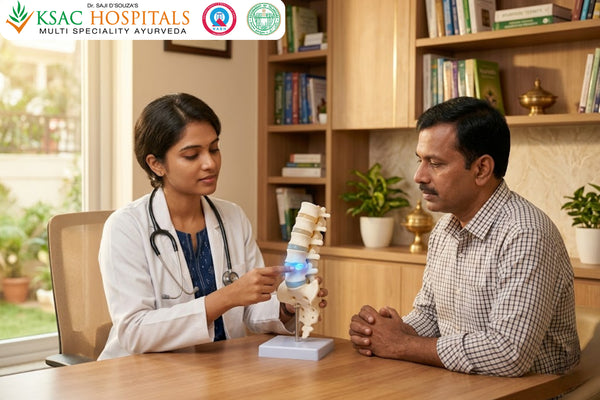
Can a Herniated Disc Be Managed With Ayurveda Instead of Surgery?
What is a herniated disc, how it differs from a disc bulge, when surgery is n...
September 2026
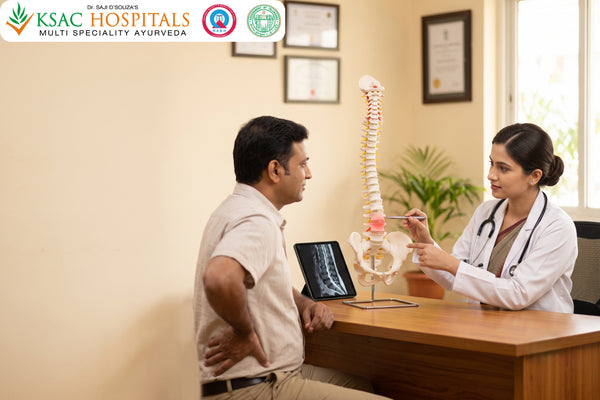
Disc Prolapse: What It Is and How Ayurveda Restores the Spine
Ayurvedic treatment for disc prolapse offers a structured non-surgical route ...

September 2026
Spinal Stenosis: Non-Surgical Care That Works
Ayurvedic treatment for spinal stenosis for leg pain and cramping on walking....
KSAC Hospitals
6-3-252/1/3, Banjara Hills Main Road, adjacent Taj Deccan, Irram Manzil Colony, Banjara Hills, Hyderabad, Telangana 500034
Phone: +91 98661 30743 · WhatsApp: +91 81062 45454 · Email: info@ksachospitals.com
Medically reviewed by Dr. Saji D'Souza (BAMS, MS). Last updated: October 2026.
This page is for general information and is not a substitute for a personal medical consultation.