


You will not be allowed to compare more than 4 products at a time
View compareAyurvedic Piles Treatment
Ayurvedic Piles Treatment in Hyderabad
Ayurvedic piles treatment in Hyderabad at KSAC Hospitals is doctor-led. This non-surgical piles treatment uses Kshara Sutra to avoid an operation where suitable. Using Kshara Sutra and classical treatment at our Ayurvedic hospital in Hyderabad, it offers short recovery for many patients.
27+
Years Experience
5000+
Patients Treated
4.9★
Patient Rating

Evidence-Based
Non-Surgical Care
Non-Surgical Care

How Ayurveda Offers Non-Surgical Piles Treatment
Piles treatment in Ayurveda combines Kshara Sutra, a medicated-thread technique, with internal medicines and dietary correction. At KSAC Hospitals in Banjara Hills, Hyderabad, this treatment in Ayurveda is doctor-led and part of our anorectal and gastrointestinal care. The aim is to shrink haemorrhoids and help the affected tissue heal without conventional surgery. Our Ayurvedic doctors assess and grade each case and plan treatment based on the individual.
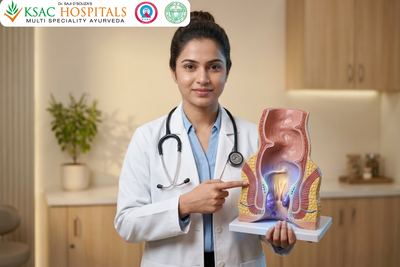
Piles, also called haemorrhoids or bawaseer, are swollen veins in the lower rectum and anal canal. Piles develop when sustained pressure causes these veins to widen and fill with blood, leading to swelling, bleeding, itching, and pain. Piles are common and, in many cases, may respond well to treatment when addressed early, particularly for lower-grade cases.
If you are wondering how to cure piles without operation, KSAC Hospitals offers doctor-led, non-surgical piles treatment. Whether a surgical or non-surgical approach is right for you is decided only after a proper diagnosis, based on the type and grade of piles confirmed at your consultation.
Piles Treatment Specialists in Hyderabad

4:12
Dr. Ansy D'Souza — Senior Physician and Director
Non-Surgical Piles Treatment
MBBS (Kuvempu University) | DFM (London)Expert Insight
"Anorectal health is essential for daily comfort and dignity. Through targeted Panchakarma therapies and customized treatment plans, we help patients overcome piles."
Dr. Ansy D'Souza
Senior Physician & Director
Ready to Consult Our Specialist?
Schedule a personalised consultation for lasting relief from piles.

Types of Piles
Piles are classified by where they form and how they behave. Identifying the type helps the doctor plan the right approach.

Internal piles (internal haemorrhoids)
Internal piles form inside the rectum, above the anal opening (above the dentate line). Internal piles are often painless, and the main sign is bright red bleeding during a bowel movement.
External piles (external haemorrhoids)
External piles form under the skin around the anus (below the dentate line). External piles can be felt as lumps and often cause itching, pain, and discomfort while sitting.
Prolapsed piles (prolapsing haemorrhoids)
Prolapsed piles are internal piles that bulge out of the anus. Prolapsed piles may return on their own, need to be pushed back, or stay out.
Thrombosed piles (clotted haemorrhoids)
Thrombosed piles occur when a blood clot forms inside an external pile, causing sudden severe pain and a firm, tender lump that needs prompt medical attention.
The Four Grades of Internal Piles
Doctors grade internal piles on a four-point scale based on how much they prolapse. In piles treatment in Ayurveda, the grade helps guide whether treatment is non-surgical or needs a procedure.

Grade I
Grade I piles are small swellings inside the anal lining that do not prolapse. Often the only sign is occasional painless bleeding.
Grade II
Grade II piles prolapse during a bowel movement but return inside on their own afterward. Bleeding and mild discomfort are common.
Grade III
Grade III piles prolapse and need to be pushed back manually. Discomfort, bleeding, and mucus discharge become more noticeable.
Grade IV
Grade IV piles stay prolapsed outside the anus and cannot be pushed back. This stage often causes significant pain and needs prompt care.

Common Symptoms of Piles
Consider seeing a piles specialist in Hyderabad if you notice any of the following, especially if they recur or worsen:
- Bright red blood in the stool or on toilet tissue
- Pain or discomfort while passing motions
- Itching or irritation around the anus
- A lump or swelling near the anal opening
- Mucus discharge or a feeling of incomplete evacuation
- Piles that have returned after earlier treatment

Common Causes That Contribute to Piles
Piles develop when pressure increases in the veins of the lower rectum and anus. Common causes and risk factors include:
- Chronic constipation and straining during bowel movements
- A low-fibre diet and inadequate water intake
- Prolonged sitting, especially on the toilet
- Pregnancy and the pressure it places on pelvic veins
- Obesity and a sedentary lifestyle
- Heavy lifting, ageing, and a family history of piles

How Ayurveda Sees the Root Cause of Piles

In Ayurveda, the root cause of piles is understood as a disturbance in digestion and an imbalance of the doshas, particularly Vata, which governs movement and the lower digestive tract. When digestion is weak and elimination is irregular, waste hardens, straining increases, and pressure builds in the anal veins. Over time this pressure causes the veins to swell into piles.
This is why Ayurvedic piles treatment in Hyderabad at KSAC Hospitals does not focus only on the pile mass. It looks at the digestion, diet, and lifestyle behind it, so that the reason the piles formed is addressed alongside the piles themselves. This follows our evidence based Ayurveda in Hyderabad approach at KSAC Hospitals, an Ayurvedic hospital in Hyderabad.
How the condition becomes aggravated
Piles are often made worse by the same habits that caused them. A low-fibre diet, inadequate water, prolonged sitting, repeated straining, and chronic constipation keep the pressure on the anal veins high. Very spicy or oily food, irregular meal times, long hours of sitting at work, and holding back the urge to pass stool can all aggravate the condition and slow healing. Managing constipation early, with help such as Ayurvedic remedies for constipation, may reduce this pressure.
When these factors continue, lower-grade piles can progress to higher grades. Identifying and correcting the aggravating habits is a key part of treatment at KSAC Hospitals, because it supports healing and reduces the chance of the piles returning.

What Are the Ayurvedic Treatment Options for Piles?
Ayurveda treatment in Hyderabad for piles centres on two main options: classical medicines with diet and lifestyle correction for lower grades, and Kshara Sutra, a medicated-thread technique, for higher grades. At KSAC Hospitals, a piles specialist doctor in Hyderabad matches the plan to the grade and cause of piles. Lower-grade piles are often managed without any procedure, using medicines, dietary correction, and lifestyle guidance to ease symptoms and support healing.
For patients asking how to cure piles without operation, Kshara Sutra treatment is offered as non-surgical piles treatment for higher grades. Kshara Sutra treatment works on the pile mass gradually while the internal medicines, diet, and lifestyle changes address the underlying digestion and pressure. This evidence based Ayurveda in Hyderabad method works on the cause, not only the symptom. Because the approach works on both the pile mass and its cause, it aims for relief that lasts. Outcomes can vary, and Kshara Sutra can be considered for suitable cases after assessment.
Every treatment plan at KSAC Hospitals is decided after a consultation and assessment, so the Ayurveda treatment in Hyderabad you receive fits your specific condition rather than a fixed package. This makes Ayurveda treatment in Hyderabad at KSAC Hospitals personal to each patient.
Kshara Sutra Treatment for Piles Explained

Kshara Sutra is a medicated Ayurvedic thread coated with herbal alkaline preparations. The thread is applied to the base of the pile mass, where it may gradually reduce the blood supply and help the tissue shrink, while the alkaline medicines are intended to support healing of the area.
Because Kshara Sutra is minimally invasive, it avoids the larger wounds of open surgery. Many patients are able to go home the same day and return to their routine within a short period. It is a recognised technique in Ayurvedic proctology, used at KSAC Hospitals for both piles and fistula. Learn more about our Ayurvedic fistula treatment in Hyderabad.

How Piles Are Diagnosed at KSAC Hospitals
A piles specialist in Hyderabad begins with accurate diagnosis, which confirms the type and grade of piles and helps rule out other causes of bleeding. At KSAC Hospitals, diagnosis typically involves:
- A detailed history of symptoms, diet, and bowel habits
- A physical and visual examination of the anal region
- A digital rectal examination to check for internal piles
- Proctoscopy to view the anal canal and grade internal piles
- Further evaluation when bleeding needs to be distinguished from other conditions
Bleeding should always be assessed by a doctor rather than assumed to be piles, because its causes can overlap with other conditions, including those covered under our Ayurvedic anal fissure treatment.


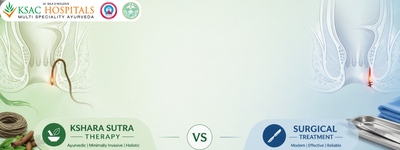
Non-Surgical Piles Treatment vs Conventional Surgery
Piles can be managed in different ways depending on the type, grade, and individual. The table below outlines general differences between conventional surgery and the Kshara Sutra approach used at KSAC Hospitals. The right option for you is decided with your doctor after assessment.
This information is general and educational. Outcomes vary from person to person, and a consultation is needed to decide the most suitable option.

Recovery After Ayurvedic Piles Treatment
Recovery after Ayurvedic piles treatment in Hyderabad varies by the grade of piles and the individual. Many patients go home the same day and return to routine within a short period. To support healing and reduce the chance of piles returning, KSAC Hospitals guides patients on:
- A high-fibre diet with plenty of water to keep stools soft
- Warm sitz baths and, where advised, Panchakarma therapies to soothe the area and support healing
- Avoiding prolonged sitting and straining during bowel movements
- Prescribed Ayurvedic medicines taken as directed
- Gentle activity and follow-up visits with a piles specialist in Hyderabad to track healing

What Are the Chances of Piles Recurring?
Piles can return after any treatment, and with Ayurvedic piles treatment in Hyderabad the chance of recurrence depends mainly on whether the underlying causes are addressed. If the habits that caused the piles, such as a low-fibre diet, straining, and prolonged sitting, continue after treatment, piles are more likely to come back.
A piles specialist doctor in Hyderabad at KSAC Hospitals aims to lower this chance by treating the root cause alongside the pile mass and by guiding patients on diet and lifestyle. Kshara Sutra is described in Ayurvedic proctology literature as having lower recurrence when combined with these changes, though results may vary between patients. You can read more about whether piles come back after surgery. Even so, no treatment can rule out recurrence entirely, and following the aftercare advice is important for lasting relief.
Why Patients Choose KSAC Hospitals for Piles Care
As an Ayurvedic hospital in Hyderabad, KSAC Hospitals has practised classical Ayurveda for over 27 years. This evidence based Ayurveda in Hyderabad approach means patients are assessed and treated by our expert Ayurvedic piles specialists, with a treatment plan based on the individual rather than a fixed package. For patients comparing where to go for Ayurvedic piles treatment in Hyderabad, this focus on experience, root-cause care, and a personalized plan is what sets KSAC Hospitals apart. Many people want treatment that avoids surgery, which is exactly what the Kshara Sutra approach offers. The team also provides insurance and reimbursement support in Hyderabad where applicable.
Patient Success Stories

Maliha Sultana
Hyderabad"My bleeding stopped and I can sit and walk comfortably. Fully satisfied."

M. Yadi
Chennai"Treated without surgery. Symptoms improved significantly within weeks."

Hemant Sharma
Delhi NCR"Healed naturally without operation. Grateful to the doctors."
5000+
Patients Treated
27+
Years of Practice
4.9
Average Rating
319+
Google Reviews

Frequently Asked Questions
Can piles be treated without surgery?
In many cases, yes. If you are searching how to cure piles without operation, lower-grade piles are often managed with Ayurvedic medicines, diet, and lifestyle changes, while Kshara Sutra offers a non-surgical option for suitable cases. Whether it is right for you depends on the type and grade, which your doctor confirms at consultation.
Is surgery always necessary for piles?
No, surgery is not always necessary. Grade I and early Grade II piles are usually managed without any procedure. For higher grades, Kshara Sutra is considered as a non-surgical option that avoids conventional cutting surgery, where the doctor finds it suitable for your case.
How long does piles treatment take?
The duration depends on the grade of piles and the individual patient. Some people notice improvement within a few sessions, while more advanced cases may need a longer plan. Your doctor shares an expected timeline and reviews progress at each follow-up consultation.
Is the treatment painful or does it need a hospital stay?
Kshara Sutra is minimally invasive, usually performed under local anaesthesia with manageable discomfort. Many patients are treated as day-care and go home the same day, though this depends on the grade of piles and the individual case, which the doctor assesses beforehand.
Do piles turn into cancer?
No, piles do not turn into cancer. However, rectal bleeding can have several causes, some of which are more serious, so it should always be assessed by a doctor rather than assumed to be piles. Early evaluation helps rule out other conditions.
Does KSAC Hospitals treat piles that returned after surgery?
Yes. Patients sometimes come to KSAC Hospitals for piles that have returned after an earlier procedure. The doctor assesses the case, identifies contributing factors, and advises whether the Ayurvedic approach with Kshara Sutra is suitable, along with diet and lifestyle guidance to support recovery.
Is piles a hereditary disease?
Piles are not strictly a hereditary disease, but a family history can increase your likelihood of developing them. Weakness in the vein walls and connective tissue can run in families. Lifestyle factors such as diet, constipation, and prolonged sitting usually play a larger role, and these can be managed to lower your risk.
Is piles treatment covered under insurance?
KSAC Hospitals supports insurance and government reimbursement where applicable. The team helps patients understand their coverage and assists with the paperwork and approvals. Exact cover depends on your policy and the treatment recommended, which the coordinators explain clearly during your consultation and before treatment begins.
Ready to Begin Your Healing Journey?
Take the first step towards lasting relief from piles.
- 27+ years with 5000+ patients
- Non-surgical with Kshara Sutra
- Banjara Hills, Hyderabad
Call: +91 9866130743 / +91 8106245454
Latest Blogs
Evidence-based articles and expert commentary.
KSAC Hospitals
6-3-252/1/3, Banjara Hills Main Road, adjacent Taj Deccan, Irram Manzil Colony, Banjara Hills, Hyderabad, Telangana 500034
Phone: +91 98661 30743 · WhatsApp: +91 81062 45454 · Email: info@ksachospitals.com
Medically reviewed by Dr. Ansy D'Souza (MBBS, DFM). Last updated: September 2026. Where treatment claims are made, they are supported by classical Ayurvedic texts and available clinical literature on Kshara Sutra; references can be added on the live page.
This page is for general information and is not a substitute for a personal medical consultation. Individual results vary.